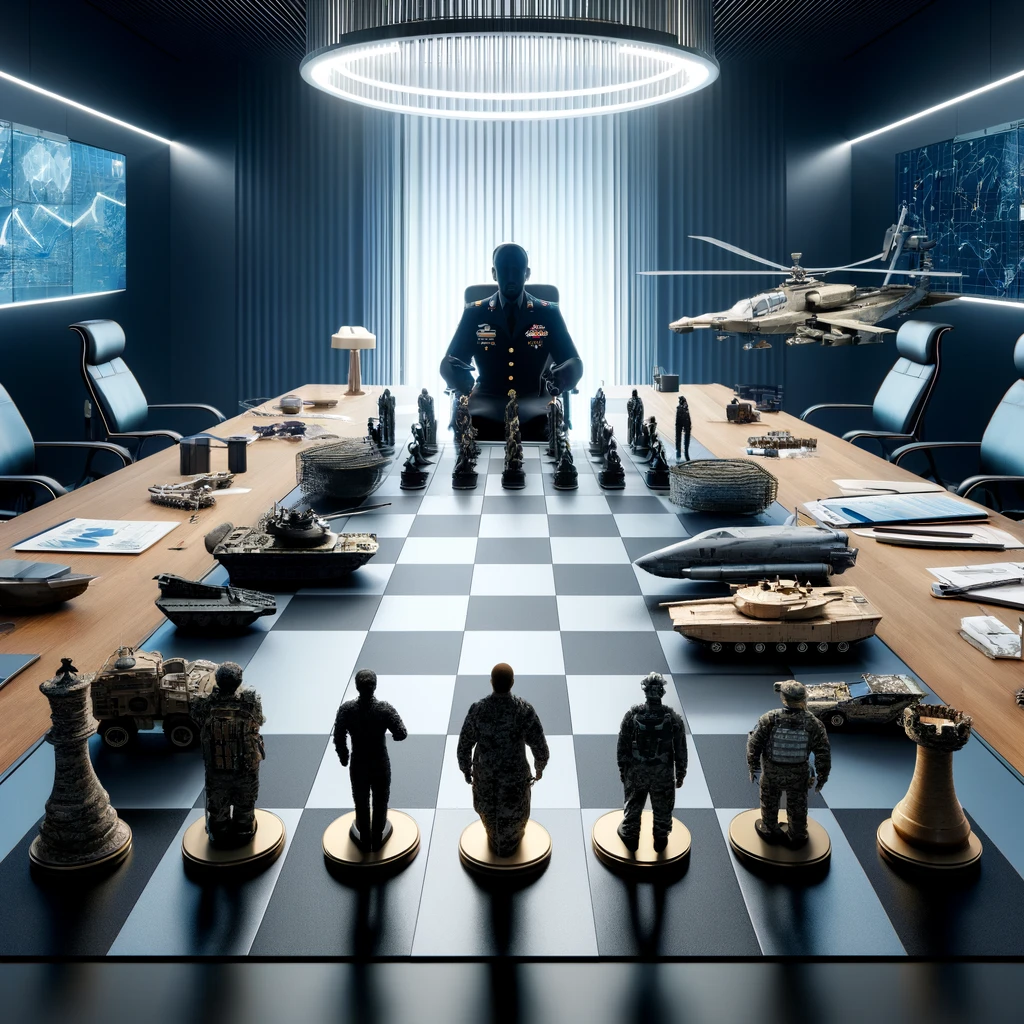

We live in systems that do not end.
Markets, geopolitics, technology, and institutions are not problems to be solved once, but environments that evolve. The most common strategic failure today is treating moments as final—believing that decisive action in the present outweighs adaptability over time. When strategy is framed that way, ego quietly replaces judgment.
The alternative is double thinking.
Double thinking is the discipline of holding competing interpretations at once: how power is exercised now, and how it migrates over time. Pressure and positioning. Risk and opportunity. It is not indecision—it is how leaders avoid being captured by their own assumptions.
This discipline matters most in conflict, trade, and long-term positioning.
Trade Is Not Loyalty, It Is Exposure Management
States and organizations do not trade because they trust one another. They trade because interdependence reduces vulnerability. Markets are not moral actors; they reward predictability and punish volatility. When uncertainty rises, rational actors rebalance exposure.
The increasing reliance by the United States on tariffs as a central economic instrument reflects a pressure-based, chess-like logic: impose cost, signal resolve, force near-term concessions. Tariffs assume limited alternatives and decisive outcomes.
But tariffs also transmit risk. They signal that market access can be politicized and recalibrated quickly. Over time, this volatility does not produce submission—it produces diversification.
This response is often misread as disengagement or defiance. In reality, it is insurance. States and firms do not reduce dependence on dominant markets out of ideology; they do so because single-point exposure becomes irrational when predictability declines.
Trade behavior follows incentives, not narratives.
Chess and Mahjong: Different Games, Different Outcomes
Much of the misunderstanding in global strategy comes from assuming everyone is playing the same game.
Western thinking often resembles chess: decisive, zero-sum, and outcome-oriented. One board. One king. One end state. Victory is defined by defeating an opponent.
Much of Asia operates closer to mahjong logic. Mahjong is not about eliminating players. It is about territory, accumulation, timing, and configuration. Players accept short-term losses to secure long-term positioning. Winning comes not from domination, but from shaping the board so future outcomes favor you.
Chess seeks dominance.
Mahjong seeks control.
When these logics collide, ego fills the gap. Patience is mistaken for weakness. Flexibility for duplicity. Diversification for disloyalty. Moral language replaces structural analysis.
But the reality is simpler: actors adapt to the rules they are given.
Not Either/Or, But Both/And
As volatility increases—through tariffs, sanctions, political cycles, or supply chain shocks—the world is not choosing one system over another. That framing itself is a chess illusion.
Instead, states and firms pursue parallel strategies:
-
Continued engagement with U.S. markets because of scale, liquidity, and innovation
-
Simultaneous expansion of regional trade, alternative corridors, and financial mechanisms
-
Emphasis on redundancy over dependence
This is not fragmentation. It is optimization in an infinite game.
In systems that do not end, betting on permanence is irrational. Adaptability is the only stable position.
Double Thinking as Professional Discipline
A useful test of strategy is this question:
What advice would I give my worst enemy if professionalism were mandatory?
Not advice meant to harm them—but advice that would genuinely help them succeed within the shared system.
The answer is always the same: diversify exposure, reduce volatility risk, preserve access to multiple systems.
If that advice makes sense for them, it reveals the predictable consequences of one’s own actions. Leverage that accelerates exit strategies is not strength—it is erosion.
Double thinking is how leaders separate identity from strategy, emotion from structure, and short-term wins from long-term relevance.
How We Think
At Bell Blomquist Consulting, we operate from a simple premise:
the future is not shaped by single outcomes, but by the ability to remain relevant across change.
We think in infinite games
There are no final moves. Strategy is about continuity, resilience, and long-term positioning.
We practice double thinking
We hold opposing interpretations at once to challenge bias and avoid ego-driven decisions.
We focus on patterns, not headlines
Events are noise. Patterns are signal. Structural shifts matter more than daily volatility.
We optimize for optionality
Rigid strategies fail in dynamic systems. We design approaches that allow for multiple futures.
We play more than one game
Not all actors optimize for the same outcome. Chess and mahjong logics coexist—and must be navigated simultaneously.
We separate identity from strategy
Professional clarity outlasts emotional certainty. Incentives outlive narratives.
We assume change will be uneven
Disruption is not failure—it is transition. What matters is how systems reorganize afterward.
We believe the future is forming now
The outline is already visible to those willing to look beyond immediacy.
Looking Toward 2026 and Beyond
The years ahead will not always look encouraging. Volatility will persist. Some transitions will be abrupt, even violent. These are not signs of terminal decline, but of systems shedding outdated constraints.
Firestorms dominate attention because destruction is immediate. What follows—reconfiguration, growth, renewal—emerges more quietly.
Beneath the haze, patterns are sharpening. Supply chains are re-routing. Markets are diversifying. New configurations are forming against the horizon.
The opportunity is not disappearing.
It is reorganizing.
In infinite games, volatility is not the enemy. Rigidity is.
There is light ahead—not because disruption ends, but because adaptability compounds. Those who see the pattern early and act deliberately will not merely adapt to the future—they will help define it.
The game continues.
The board is changing.
And advantage belongs to those who understand which game is being played—and how many
Christopher Bell
Blomquist Consulting
Managing Director
Disclaimer
This content is provided for general informational and strategic insight purposes only and does not constitute investment advice, legal advice, or specific policy recommendations. Views expressed reflect a strategic perspective based on publicly observable trends and are not tailored to individual circumstances.
Bell Blomquist Consulting assumes no responsibility for actions taken based on this material without appropriate independent analysis or professional consultation.
#strategy #globaltrade #geopolitics #infinitegames #systemsThinking
#patternRecognition #decisionMaking #riskManagement #leadership
#strategicConsulting #BellBlomquist